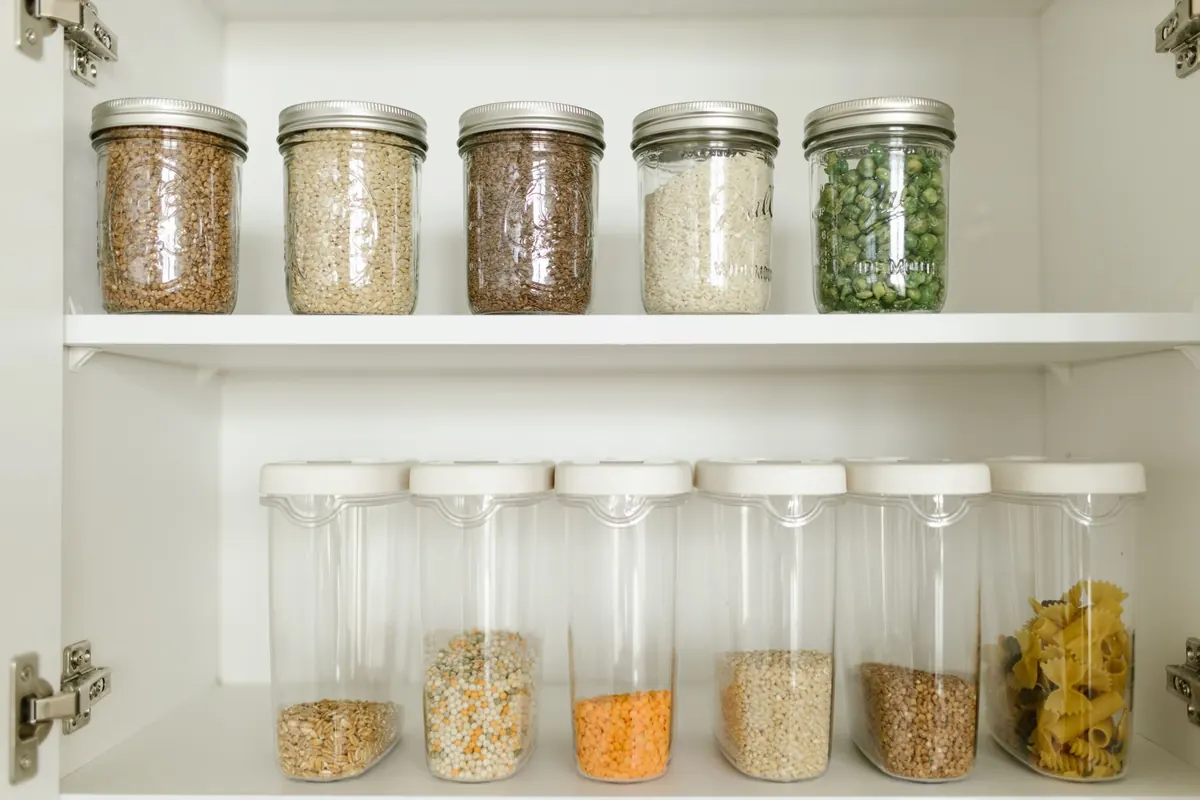
Open enough pantry photos and you notice the same two layouts. One is a wall of matching clear containers, labels facing forward. The other is a shelf of woven baskets, each with a little tag. Both look calm and deliberate. Both also fail in specific situations, and the trouble usually starts when someone tries to make one format do every job in the cupboard.
The better question isn't which material wins. It's which belongs on which shelf, holding which food, for the way you actually cook.
Visibility: The Clear Container Advantage
A clear container answers a question before you open it. You can see that the rice is down to a cup, that the oats are nearly finished, that the last of the cocoa is clumped at the bottom. On a Tuesday night with dinner half made, that glance saves real time.
Visibility also audits your pantry for you. Decanting a bag of flour into a jar means handling the bag, checking the date, and noticing if anything has crawled in. Baskets let you skip that step, which is convenient right up until you find the bag you bought two years ago.
The catch is that clear only works when it's genuinely clear. Scratched, frosted, or thin plastic containers go cloudy and hide as much as they show. Wide, straight-sided containers hold more than tapered ones of the same height, and they let you scoop without a funnel. And if a shelf holds nine mismatched jars, the visual noise can be worse than a closed door.
Where Woven Baskets Do a Better Job
Baskets are containers for categories, not for single items. A basket marked "baking" can swallow a bag of walnuts, a half-used box of brown sugar, sprinkles, and a stray tube of food colouring without any of it needing to match. That flexibility is hard to beat for awkward, irregular, or constantly changing contents.
They're also kinder to high shelves and deep shelves. If a shelf is above eye level, you can't see into a container anyway, so you may as well pull down one basket and set it on the counter. Same for a deep cupboard where you'd otherwise be reaching past the front row to find the back one.
Two practical notes. Fabric liners keep crumbs, sugar, and rice from sifting through the weave, and they can be shaken out or washed. And label baskets on the front face, not the handle, or you'll be tipping each one forward to read it.
Airflow: small detail, real consequences
This is where the two formats genuinely diverge. Onions, garlic, potatoes, winter squash, and bread want moving air and a cool, dark spot. Sealed in a container, they sweat, and that moisture invites mould and soft rot. Open-weave baskets, wire bins, and simple paper bags handle them far better.
Everything else wants the opposite. Flour, rice, oats, pasta, sugar, nuts, dried fruit, spices, and cereal go stale faster with air and moisture, and an airtight container is also your best defence against pantry moths and weevils. Store onions and potatoes apart from each other, since the gas onions release encourages potatoes to sprout.
Durability, Weight, and Cleaning
Clear plastic is light, cheap to replace, and quiet when you set it down. It also stains. Turmeric, tomato paste, and beetroot leave a tint that no amount of scrubbing fully removes, and plastic can hold onto strong smells. Check the base for a dishwasher symbol before you assume it can go in, because warped lids never seal again. In most containers the lid fails first: gaskets crack, hinge tabs snap, and a mismatched lid turns a good jar into a nuisance.
Glass resists staining and smells, but it's heavy on a shelf and unforgiving if you drop it. Woven baskets, meanwhile, dry out and crack in very warm kitchens, snag on splinters, and provide a lovely home for moths if flour dust settles in the weave. Wire baskets rust in humid conditions.
Stacking is the other split. Clear containers generally stack, which buys vertical space in a tall cupboard. Baskets mostly don't, so they need shelf width rather than height, and they work best one row deep.
Cost: Compare by Volume and Lifespan
Per litre, baskets are usually the cheaper buy, especially secondhand, and a good one lasts for years. Clear containers vary enormously. Buying a matching set looks economical, but sets often include sizes you'll never fill, so you end up buying more anyway. Buying individual pieces in the sizes that match your shelf is usually the smarter spend.
Before you buy anything, measure. Write down shelf height, depth, and the clearance for the door. A container that's a centimetre too tall is useless, and that mistake costs more than any price difference between the two formats.
A Zone-by-Zone Approach
Most pantries work best with a mix. Rather than committing to one look, assign formats by how each zone gets used.
- Eye-level shelf: clear containers for daily staples such as flour, oats, rice, and coffee, so you can see levels at a glance.
- Deep or awkward shelves: baskets you can pull out whole, grouped by meal or category.
- Top shelves: labelled baskets for refills, seasonal items, and backups you touch once a month.
- Floor-level or bottom shelves: heavier bulk items, ideally in baskets with handles or in sturdy containers with lids you can open one-handed.
- Countertop and open shelving: whatever you're willing to look at every day. Clear looks tidy in rows; baskets hide irregular shapes.
- Onions, garlic, potatoes, squash, bread: open baskets or wire bins, kept cool and dark, away from sealed grains.
One workable rule: if you reach for it more than twice a week, make it visible. If you reach for it monthly, make it contained.
Start With One Shelf, Not the Whole Pantry
Pick the shelf that annoys you most, empty it, and try a single format there for a month. If you're constantly opening a basket to check whether you have pasta, switch that shelf to clear. If your clear containers keep leaving crumbs everywhere or nothing quite fits, switch to baskets.
Keep the receipts and don't rebuy the whole cupboard at once. Pantry storage is one of the few areas where a mismatched system that matches your habits beats a beautiful one that doesn't, and you'll only learn which is which by living with it for a few weeks. Label both formats, measure before you spend, and let airflow decide what goes where.
Photo: RDNE Stock project / Pexels